Shep Wolsky Battery Innovator Award
The Shep Wolsky Battery Innovator Award, named after our conference founder, is presented to an individual who has helped to shape technology and advance the field of energy storage worldwide and in addition, embodies the belief in expanding and fostering a global community. The Shep Wolsky Battery Innovator Award is given annually at the International Battery Seminar & Exhibit. Shep was the founder of the event and played a pivotal role in its success until his passing in 2017. The first Shep Wolsky Battery Innovator Award was given posthumously to Shep himself in 2018 in his honor.
Award Winners Include:
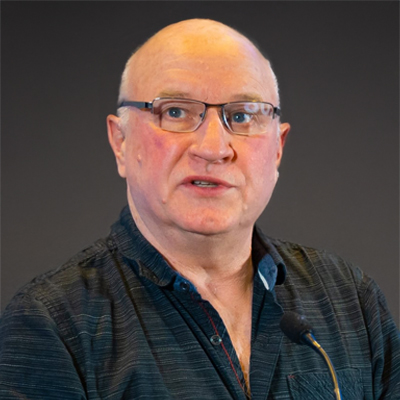 Jeff Dahn, FRSC, PhD
Jeff Dahn obtained his BSc from Dalhousie University (1978) and his PhD from the University of British Columbia in 1982. Dahn then worked at NRC (Canada) ('82-'85) and at Moli Energy ('85-'90) before taking up a faculty position at Simon Fraser University in 1990. He returned to Dalhousie in 1996. At Moli, he did pioneering work on lithium-ion batteries. Dahn was appointed as the NSERC/3M Canada Industrial Research Chair in Materials for Advanced Batteries at Dalhousie University in 1996, a position that he held until 2016. In 2016, Dahn began a research partnership with Tesla as the NSERC/Tesla Canada Industrial Research Chair, which will continue until 2026. Dahn’s research has been recognized by numerous awards, including a Governor General’s Innovation Award (2016) and the Gerhard Herzberg Gold Medal in Science and Engineering (2017), Canada’s top science prize. He is the only person to have been awarded both awards thus far. Dahn is a Fellow of the Royal Society of Canada and an Officer of the Order of Canada.
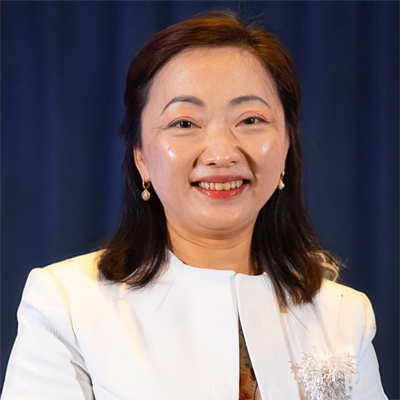 Shirley Meng, PhD
Professor Y. Shirley Meng received her Ph.D. in Advance Materials for Micro & Nano Systems from the Singapore-MIT Alliance in 2005, after which she worked as a postdoc research fellow and became a research scientist at MIT. Shirley currently holds the Zable Endowed Chair Professor in Energy Technologies and is Professor of NanoEngineering and Materials Science, University of California San Diego (UCSD). She is the founding Director of the Sustainable Power and Energy Center (2015-2020) and was named as inaugural director of the Institute of Materials Discovery and Design. Professor Meng received the National Science Foundation (NSF) CAREER award in 2011, UCSD Chancellor’s Interdisciplinary Collaboratories Award in 2013, C.W. Tobias Young Investigator Award of the Electrochemical Society (2016), International Coalition for Energy Storage and Innovation (ICESI) Inaugural Young Career Award (2018), American Chemical Society ACS Applied Materials & Interfaces Young Investigator Award (2018), a Finalist for the Blavatnik National Award (2018), International Battery Associations Research Award (2019) and Royal Chemical Society Faraday’s Medal (2020). She is the author and co-author of more than 225 peer-reviewed journal articles, 2 book chapter and 5 issued patents. Professor Meng serves on the executive committee for battery division at the Electrochemical Society and she is the Editor-in-Chief for MRS Energy & Sustainability. She is an elected fellow of the Electrochemical Society (FECS) and fellow of the Materials Research Society (FMRS).
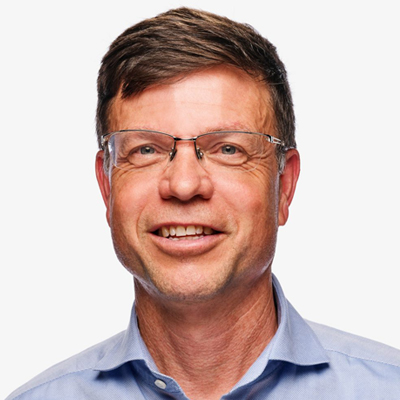 Kurt Kelty
Kurt is currently the vice president of battery cell and pack for General Motors. Prior to that Kurt was the VP of Automotive at Sila Nanotechnologies, a battery materials company that enables lighter, higher energy density lithium-ion batteries for mass adoption of electric vehicles, longer-lasting portable electronics, and broader use of renewable power sources. Kelty brings more than 25 years of experience in the battery industry, including 11 years at Tesla, where he most recently served as Senior Director of Battery Technology. There he was responsible for leading numerous key initiatives, including setting the company’s battery cell usage strategy, delivering the batteries implemented in the Roadster, Model S/X and Model 3, and leading partnerships and material sourcing efforts at the Gigafactory, among many others. Prior to Tesla, Kelty was Director of Business Development at Panasonic, where he founded the U.S. battery R&D lab. Kelty holds a BA in Biology from Swarthmore College and a Master of Science from Stanford.
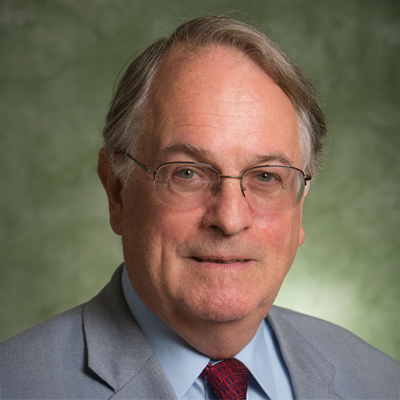 Stanley Whittingham, PhD
Stanley Whittingham is a SUNY distinguished professor of chemistry and materials science and engineering at SUNY Binghamton and the 2019 Chemistry Nobel Laureate. He received his BA and D Phil degrees in chemistry from Oxford University, where he is an honorary Fellow of New College. He has been active in Li-batteries since 1971 when he won the Young Author Award of the Electrochemical Society for his work on the solid electrolyte beta-alumina. In 1972, he joined Exxon’s Corporate Research Laboratory and discovered the role of intercalation in battery reactions, which resulted in the first commercial lithium rechargeable batteries that were built by Exxon Enterprises. In 1988 he returned to academia at SUNY Binghamton to initiate a program in materials chemistry. He initiated graduate program in Materials Science and Engineering. He was awarded a JSPS Fellowship in the Physics Department of the University of Tokyo in 1993. From 1993-1999 he was Vice-Provost for Research. In 2004 he received the Battery Division Research Award. He is presently Director of the NECCES EFRC based at Binghamton. In 2012 he received the Yeager Award of the International Battery Association for his lifetime contributions to battery research; in 2015 he received the Lifetime Contributions to Battery Technology award from NAATBaaT, in 2017 the Senior Research Award from Solid State Ionics, and in 2018 was elected a member of the National Academy of Engineering and received the Turnbull Award from MRS. He is a Fellow of both the Electrochemical Society and the Materials Research Society. He is Vice-Chair, Board of Directors of the New York Battery and Energy Storage Technology Consortium (NYBEST).
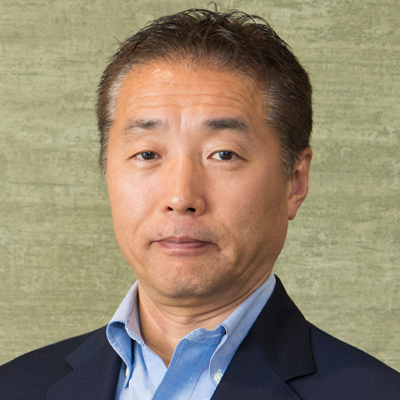 Shoichiro Watanabe, PhD
Dr. Watanabe joined Matsushita Electric Industrial 1990. In 2009, he became Director, Technology Development Center at Matsushita Battery Industrial, then in January of 2011, he became Technology General Manager of the Ion Battery Business Unit at Sanyo Electric. Dr. Watanabe obtained his PhD from Osaka Prefecture University in 2014, then in April 2015, he became Assistant Director, Secondary Battery Business Division at Sanyo Electric. In July 2016, he was named Director, Tesla Business Unit, Sanyo Electric and then in August of 2017, he became President, Panasonic Energy of North America. In April 2019, he was named Head of Energy Technology at Panasonic Corporation and then in February of 2022 Dr. Watanabe became the CTO of Panasonic Energy Corporation.
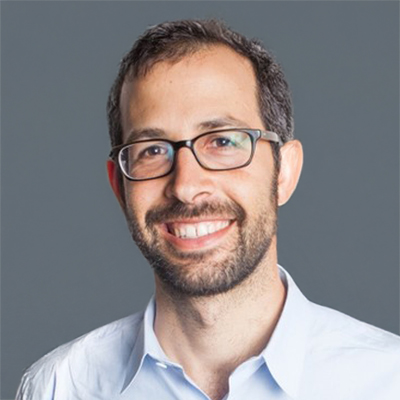 Drew Baglino
Drew Baglino is founder and CEO of Heron Power. Prior to Heron, Drew was a key executive at Tesla. He grew from an individual electrical engineer in 2006 to Powertrain Architect for the groundbreaking 2012 Model S. In 2014, he formed Tesla’s energy engineering organization, later launching and ramping multiple iterations of Powerwall, Powerpack, and Megapack. In 2018, Drew took on Tesla's motor, battery, and power electronics engineering organizations and became one of Tesla’s three named corporate officers.
From 2019-2024, as SVP of Powertrain and Energy, Drew led development of Tesla’s 4680 battery cell, dry-electrode process, and the buildout of a clean-sheet 50 GWh battery factory and materials refineries in Texas. During the same period, Drew also led Tesla’s global charging and energy businesses, including efforts to build and ramp Tesla's first Megafactory, open the Supercharging network to all electric vehicles, and propel both business units to profitability and more than $10B in combined annual revenue.
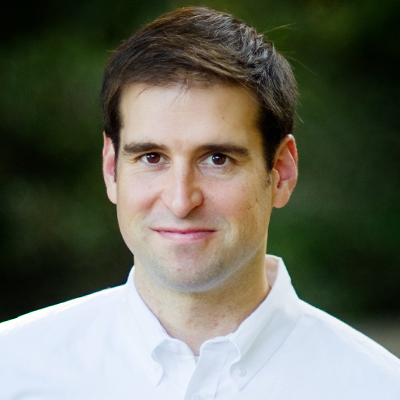 JB Straubel
JB Straubel is the founder and CEO of Redwood Materials. Prior to founding Redwood, JB co-founded Tesla, spent fifteen years as Chief Technology Officer, and currently serves on Tesla's Board of Directors. As CTO at Tesla, he built one of the best engineering teams in the world and, among many topics, led cell design, supply chain and the first Gigafactory concept through the production ramp of the Model 3. JB had a direct role in both R&D, team building and operational expansion from prototype cars through to mass production and GWh-scale.
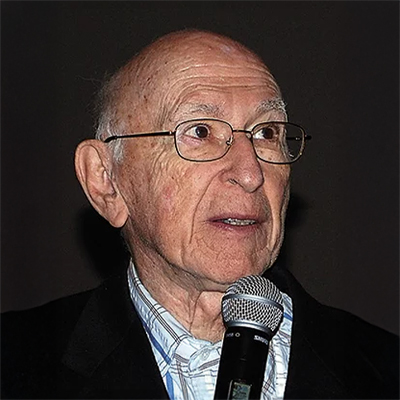 Shep Wolsky, PhD
Dr. Shep Wolsky is a veteran of WWII, having served two years in the Navy during WWII as an electronic technician. He earned his Ph.D. in Chemistry from Boston University in 1952 and spent 10 years working on the development of the transistor and its first commercial application, a transistor-powered hearing aid. He was Vice President of R&D at Duracell for 15 years and helped introduce Li-metal primary batteries, e.g., Li-sulfur dioxide and Li-thionyl chloride. He aided Sony on the introduction of the Li-ion battery and obtained the first U.S. government approval for the transportation of Li-ion batteries. Dr. Wolsky also consulted on the development of NiMH batteries. He has had more than 100 clients in his consulting career and remains active in the battery field. He initiated the popular International Battery Seminar series and has also organized series of seminar focusing Capacitors and recycling. He has authored more than 100 technical papers. At the age of 90, he is probably the oldest widely active consultant in the battery field.
Shep Wolsky Memorial
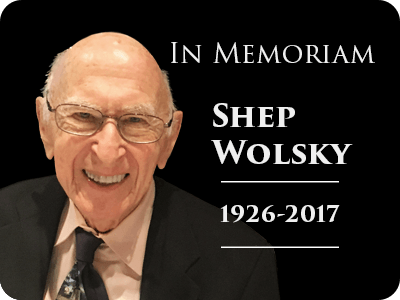
It is with profound sadness that I regret to announce the passing
of the founder of the
International Battery Seminar, Dr. Shep Wolsky.
Shep was a veteran of WWII, and served in the Navy as an electronic technician. He earned his Ph.D. in Chemistry from Boston University in 1952 and spent 10 years working on the
development of the transistor and its first commercial application, a transistor-powered hearing aid. He was Vice President of R&D at Duracell for 15 years and helped introduce Li-metal, Li-sulfur dioxide and Li-thionyl chloride batteries. He aided
Sony on the introduction of the Li-ion battery and obtained the first U.S. government approval for the transportation of Li-ion batteries. Having authored over 100 technical papers, Shep also consulted on the development of batteries with many clients
around the world. In addition to his scientific and technical involvement with lithium ion batteries, Shep was an accomplished writer, with several of his plays having been published and produced. He founded the widely respected International Battery Seminar series
in 1983.
Working on the International Battery Seminar until his passing, his passion and impact on the worldwide battery community was profound and he will be deeply missed. In recognition of Shep's tremendous contributions
to the field over so many years, the Annual Battery Innovator Award, given at the seminar each year, will become the Shep Wolsky Battery Innovator Award, in his honor.
Phillips Kuhl, President
Cambridge EnerTech
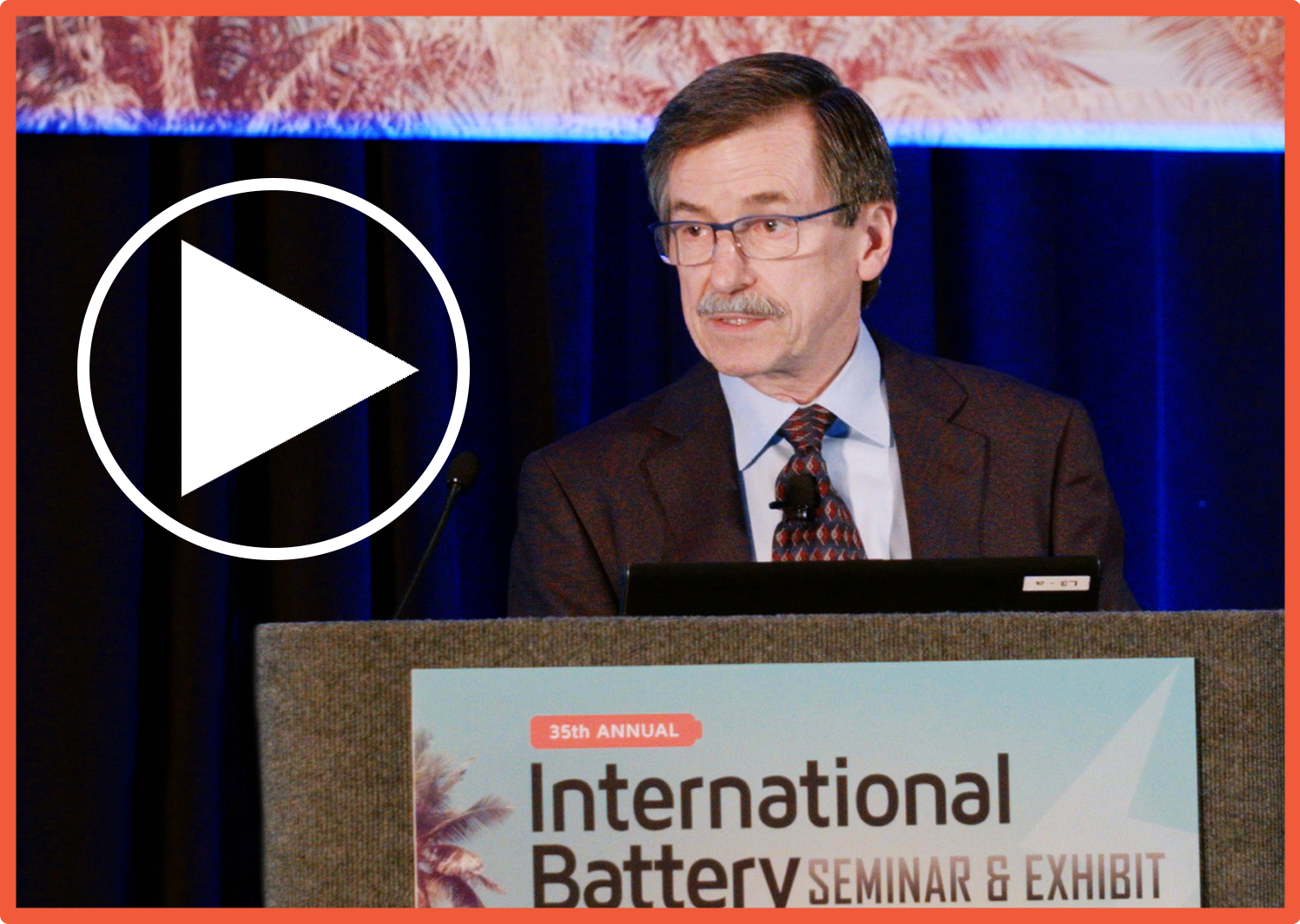
Brian Barnett served as chair of the Shep Wolsky Battery Innovator Award and Tribute at the 2018 event